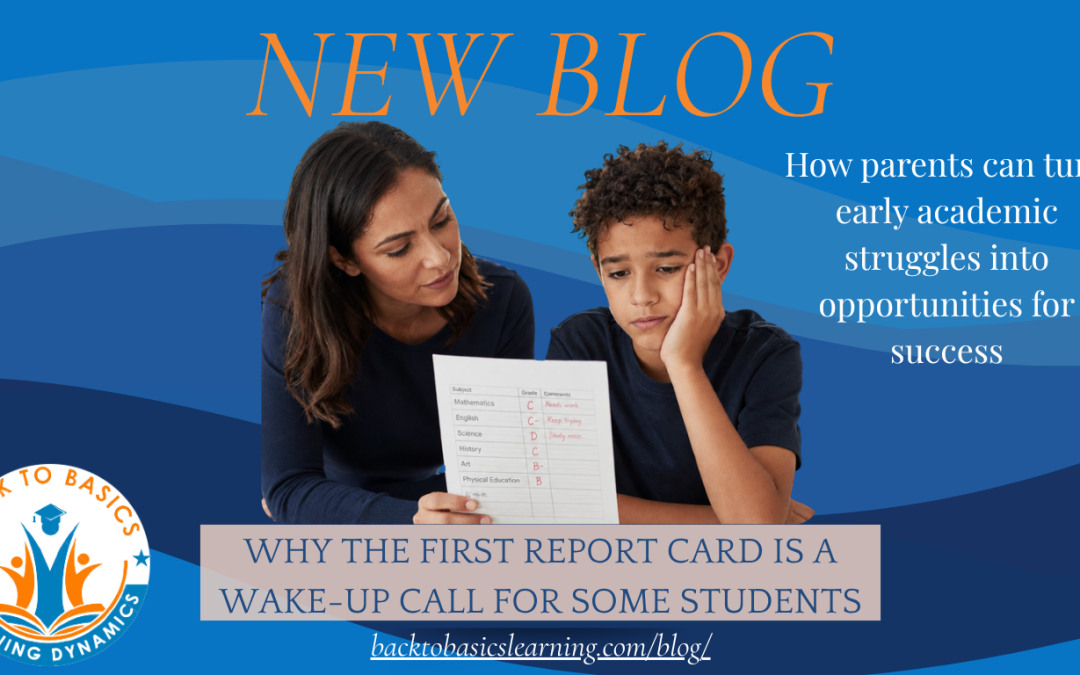
Why the First Report Card Is a Wake-Up Call for Some Students
How parents can turn early academic struggles into opportunities for success
The first months of a new school year bring new teachers, new routines, and increasingly challenging material. So when the first report card arrives, some families find their child’s performance isn’t where they expected it to be.
For some students, that report card confirms their hard work is paying off. For others, it’s a wake-up call. Lower-than-expected grades, missing assignments, or teacher comments about classroom performance may signal a need for additional support.
The good news is that a disappointing first report card doesn’t define the rest of the year. With early intervention, encouragement, and the right support, students can regain confidence, strengthen their skills, and get back on track.
What the First Report Card Really Tells You
A report card is more than a snapshot of grades. It shows how well a child is adjusting to the academic and organizational demands of a new year.
Expectations rise with each grade level. Elementary students meet more complex reading and math concepts. Middle schoolers must juggle multiple teachers, assignments, and deadlines. High schoolers face demanding coursework, extracurricular commitments, and preparation for college or careers.
When grades slip, the cause isn’t always a lack of effort. A student may be struggling with foundational skills, time management, organization, or a new concept.
Look beyond the letter grades and ask:
• Is my child completing and submitting assignments on time?
• Are certain subjects consistently more challenging than others?
• Does my child understand the material being taught?
• Has my child become frustrated, discouraged, or less interested in school?
• Are study habits and organizational skills contributing to the difficulty?
Understanding the reasons behind a struggle is the first step toward solving it.
Why Students Struggle Early in the School Year
Gaps in foundational skills. Learning builds on prior knowledge. A student who struggled with fractions last year may find algebra harder this year, and a student with weak reading comprehension may have trouble with increasingly complex texts in every subject. These gaps become more noticeable as expectations rise.
Difficulty adjusting to new expectations. Each grade brings new responsibilities: working more independently, completing longer assignments, managing time, and preparing for tests with less direct guidance. Some students need extra time and support to develop these skills.
Weak study habits and organization. Some students understand the material but struggle to track assignments, prepare for tests, or meet deadlines. Building study habits and executive functioning skills can make a significant difference.
Lack of academic confidence. After repeated difficulties, students may start to doubt themselves. A child who once enjoyed math might say, “I’m just not good at math,” or a struggling writer may start avoiding assignments. Without support, this can lead to frustration and lost motivation.
Why Waiting Can Be a Mistake
A common response to a disappointing report card is to encourage a child to work harder and hope the next marking period goes better. Encouragement matters, but waiting can allow problems to grow. School curricula build on earlier lessons. When students don’t fully grasp foundational material, new lessons get harder and they fall further behind. Addressing concerns early gives students time to strengthen their skills before the gaps widen, and it can prevent the frustration and loss of confidence that come with ongoing struggles.
Five Ways Parents Can Help
1. Start with a positive conversation. Instead of focusing only on grades, ask which subjects your child enjoys, which assignments feel hard, and where they’d like help. Curiosity rather than criticism encourages openness.
2. Talk with teachers. Teachers can speak to your child’s participation, assignment completion, and understanding of concepts. They can help pinpoint problem areas and suggest next steps.
3. Establish consistent study routines. A regular homework schedule builds organization and reduces last-minute stress. Encourage your child to break big assignments into smaller steps, use a planner, and set realistic goals.
4. Celebrate progress, not just grades. Improvement rarely happens overnight. Recognize smaller wins, such as finishing assignments independently, raising a quiz score, or finally understanding a tough concept. Progress builds confidence and shows that steady effort pays off.
5. Consider personalized tutoring. Some students need more individual attention than the school day allows. One-on-one tutoring can identify specific learning gaps, reinforce classroom instruction, and provide extra practice at a pace that fits the student.
How One-on-One Tutoring Helps Students Get Back on Track
At Back to Basics Learning Dynamics, we know every student has unique strengths, challenges, and learning needs. Our experienced educators work with students in elementary reading and math, middle school and high school coursework, and study skills, identifying areas of difficulty and building an individualized plan for each child.
One-on-one tutoring can help students:
• Strengthen foundational skills by closing gaps that affect current classroom performance
• Build academic confidence in a supportive environment where questions are welcome
• Develop effective study habits for organizing assignments, preparing for tests, and managing responsibilities
• Reinforce classroom learning by reviewing difficult concepts and practicing key skills
• Become more independent learners by learning how to approach hard assignments and solve problems with confidence
A First Report Card Is a Starting Point, Not a Final Judgment
One report card does not determine a child’s potential. The start of the year is a period of adjustment, and early challenges are common. What matters is how they’re addressed. A disappointing grade can be a chance to identify learning needs, build better habits, and make a plan. With encouragement, consistent effort, and the right support, students can make real progress throughout the year. The key is to act now, before difficulties become harder to overcome.
Help Your Child Finish the School Year Strong
If your child’s first report card raised concerns, now is a great time to explore extra academic support. For more than 40 years, Back to Basics Learning Dynamics has helped students strengthen their skills, build confidence, and work toward their goals. Whether your child needs to catch up, improve study habits, or master challenging concepts, our educators provide personalized, one-on-one tutoring designed around their needs.
Don’t let a difficult first marking period define the rest of the school year. Contact Back to Basics Learning Dynamics today to learn how we can help your child move forward with confidence. Visit www.backtobasicslearning.com to learn more.

